
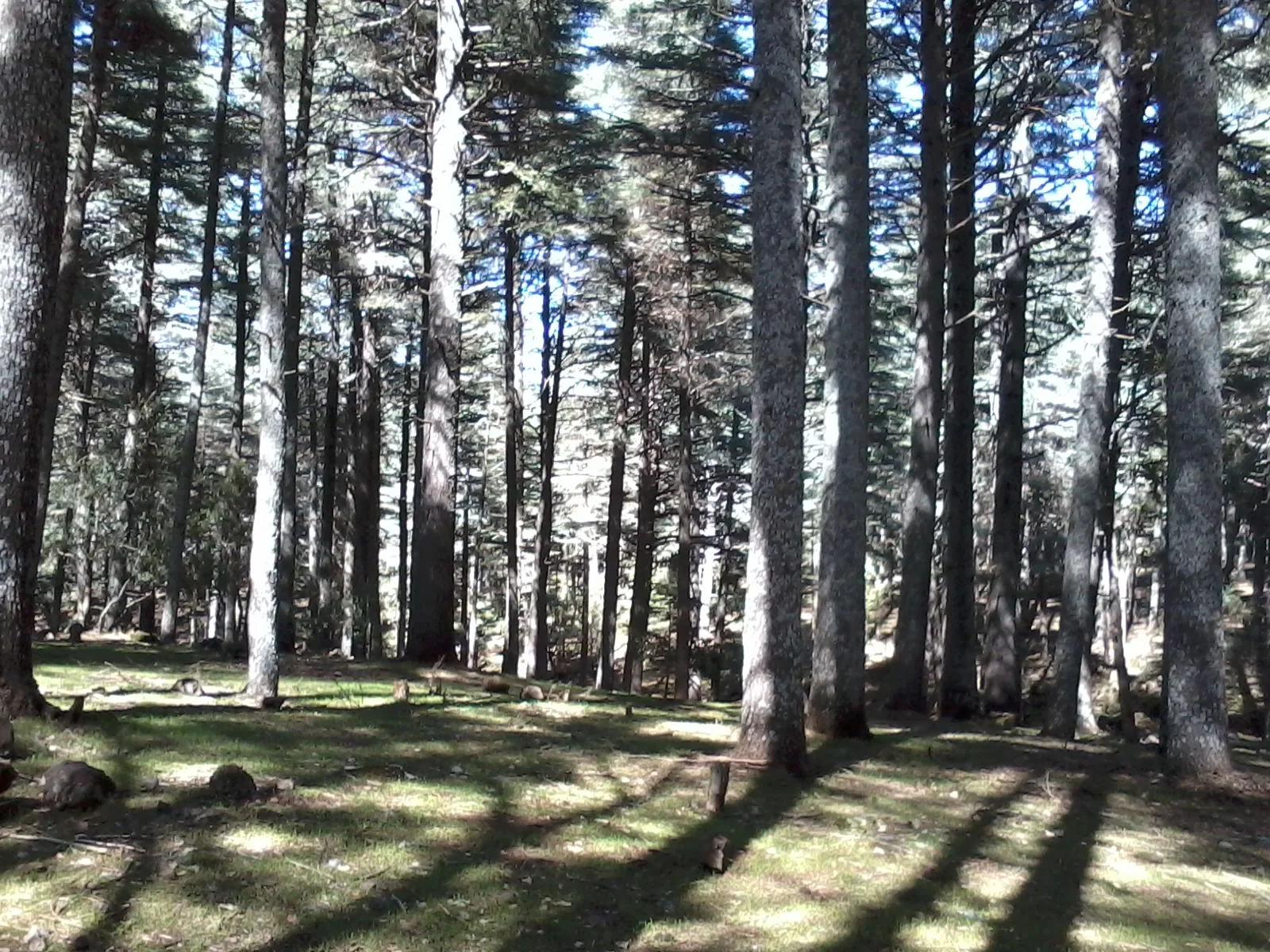
At a glance
- What is the largest forest in Morocco? — It stretches inland from the area between Rabat and Kenitra and is Morocco’s largest cork oak forest.
- What makes Moroccan forests distinctive? — One of Morocco’s forest characteristics is the range of landscapes across the country.
- What is Morocco’s best-known forest? — Maâmora is the forest to remember for cork oak.
Contents
What is the largest forest in Morocco?
Maâmora, the great lowland cork oak forest
Maâmora, also spelled Mamora, lies in northwestern Morocco. It stretches inland from the area between Rabat and Kenitra and is Morocco’s largest cork oak forest. A study published in 2024 describes it as one of the largest lowland cork oak forests in the world. In this context, a cork oak forest is a landscape where that species is characteristic or dominant.
The wording matters if you are trying to compare the largest forests in Morocco. A national park may include multiple forests, grassland and other habitats, and a woodland of another species may be measured differently. The clearest answer that the sources support concerns cork oak. Study by Fennane and Rejdali · Maâmora location
What the 132,000 hectares measure
The 2024 study gives a figure of 131,758 hectares for the forest area recorded in the 2008 land register. The rounded figure of 132,000 hectares therefore refers to the full perimeter, which includes different stands and other spaces. The study also reproduces a historical table that attributes about 133,000 hectares to cork oak in the early twentieth century.
The two results look similar on paper, but each was calculated for a different purpose. When reading a forest map or a study, check its date, the boundary used and the type of land measured. This helps explain why the same forest name can appear alongside different area figures. Study of the Maâmora forest
The same study provides a useful smaller figure. Researchers mapped about 24,879 hectares of cork oak stands producing reproduction cork in the northern part covered by their research. That study area itself was around 63,575 hectares. This count addresses productive stands in a specific sector, and its map has a different boundary from the one for the entire forest.
Read the map legend and the study boundary together when you compare the figures. For a visit, the practical point is that the appearance of Maâmora varies by sector. A map of the whole forest locates it in the region, while the details of the entrance tell you more about what the walk will involve. Study of the Maâmora forest
Why the landscape changes within the same forest
Two walks in Maâmora can give quite different impressions. Where the crowns stand apart, you may have a better view of the trunks, the thick bark and the smaller trees. In a planted area, the spacing and shape of the trunks may give the landscape a different pattern.
If you book a guide, ask where you will meet and what you can reasonably see from the planned route. Mention your interest in cork oak during the booking so the guide can advise on a suitable sector. If you have limited time, ask how far the first good observation point is from the meeting place. Study by Fennane and Rejdali
What makes Moroccan forests distinctive?
From the Atlantic plains to the mountains
One of Morocco’s forest characteristics is the range of landscapes across the country. In Maâmora the cork oak shapes a lowland forest, whereas Ifrane National Park has Atlas cedars alongside holm oaks and maritime pines. In the drier southwest, the argan tree is a characteristic part of the landscape.
A simple comparison is to choose two settings and note the spacing between the trees, the height of their crowns and the appearance of the ground. In some stretches the canopy is open enough to see the sky through it, while others have much more shade. Keeping track of your location and elevation gives those observations context. Tree species of Ifrane National Park · Moroccan National Tourist Office, nature around Agadir
A walk can also show how people have shaped a forest over time. The literature on Maâmora documents past felling and replanting with other trees, including eucalyptus. The forest reflects these different uses. In a section you visit, pause to see whether the trees are roughly the same height, whether they stand at regular intervals and whether young trees are visible near the mature ones. Each of these features is worth asking about if you meet a guide. The spacing alone is a starting point for a question about the history of the stand. Study of the Maâmora forest
Ifrane National Park is a place to pay attention to how tree species grow together. Pick a short stretch of the walk and note which trees you see most often. Look again when you reach the edge of the stand or when the trail gains height. You can later compare what you saw with the list of trees documented in the park.
Finding an oak or a pine alongside the cedars tells you more about that part of the forest. Take one picture of the landscape and another showing a detail of each tree you want to identify, so you can compare them later. Tree species of Ifrane National Park
Trees and the knowledge behind their use
The cork oak supplies material through its bark. A visit to Maâmora also raises questions about how productive stands are managed and how new trees replace older ones. The 2024 research discusses the intervals between bark harvests in productive sectors.
When walking along a public path, you can look at the bark from the path itself and compare trees with different trunk surfaces. If you want to know when or how cork is harvested, ask a guide familiar with the area. Leave the bark in place and keep clear of any areas where work is being carried out. Study of the Maâmora forest
In southwestern Morocco, argan oil is made from the kernels inside the fruit of the argan tree. UNESCO has inscribed the practices and knowledge connected with argan on its list of intangible cultural heritage. An outing can combine a walk in an argan landscape with a visit arranged with an oil producer.
Ask what part of the work you will be able to see and confirm where and when the visit starts. That way you can make time for the trees and the production process, which may take place in different locations. UNESCO, argan practices and knowledge · Moroccan National Tourist Office, nature around Agadir
How to compare cork and argan
Cork and argan offer two ways to understand how people use forest trees. In one case, the bark is the part that is harvested. In the other, work begins with a fruit and its kernel. Three questions can guide the visit: which part is collected, how productive trees are identified and where the material is processed.
The answers will help connect a workshop visit to the landscape outside it. If the walk and the workshop take more time than expected, choose the one that best fits what you want to learn and ask what you can still see from there. Study of the Maâmora forest · UNESCO, argan practices and knowledge
What is Morocco’s best-known forest?
Maâmora for cork oak, Azrou and Ifrane for cedar
Maâmora is the forest to remember for cork oak. The cedar forests near Azrou and Ifrane are among the best-known forest destinations for visitors to the Middle Atlas. The Moroccan National Tourist Office features Ifrane’s cedars and mentions the possibility of seeing Barbary macaques.
If you come across macaques, move calmly, give the animals space and keep food packed away. You may see them on one trip and miss them on another. Plan your walk around the trees, the setting and the time you want to spend outdoors, with wildlife as something you may see along the way. Moroccan National Tourist Office, Ifrane
Where to plan a walk based on what you want to see
| What to see | Where to plan a visit | What to check first |
|---|---|---|
| Cork oaks in a lowland forest | Maâmora from the Tiflet and Khémisset area | The exact entrance and pickup point. |
| Atlas cedars in the mountains | The cedar forests of Ifrane or the area around Azrou | Walking conditions, elevation gain and the forecast for the chosen area. |
| Argan trees and their uses | The southwest, between the Agadir area and the surroundings of Tamanar | Which path is open to visitors and where to meet a producer if you book a visit. |
For a half-day outing, choose a single starting point and work out how you will return from the end of the route before setting off. In a large forest the same place name may be used for several entrances. If someone is driving you, send the drop-off and pickup locations separately and agree on a time. After rain or in cold weather in the Middle Atlas, ask locally which sections are suitable for walking. A shorter route can leave time to look at the trees at your own pace, especially with a group whose members walk at different speeds.
Using Azrou or Ifrane as a base
If you stay in Azrou, start by looking for an entrance you can reach comfortably at the time you can leave town. If you stay in Ifrane, plan the time in town and the time in the cedar forest separately. Confirm the starting point of your walk and find out where you can buy water or stop before getting back on the road.
The Moroccan National Tourist Office mentions winter snow around Ifrane, so check conditions for the specific road and trail you intend to use. For a winter outing it helps to have a shorter second option near your accommodation. Moroccan National Tourist Office, Ifrane
What are Morocco’s main forest trees?
| Tree species | Where to find them or what to look for |
|---|---|
| Cork oak (Quercus suber) | The characteristic tree of Maâmora. Its bark supplies cork. |
| Atlas cedar (Cedrus atlantica) | The signature species of the Middle Atlas cedar forests, especially around Azrou and Ifrane. |
| Holm oak | One of the trees listed in Ifrane National Park. |
| Argan tree (Argania spinosa) | Characteristic of landscapes in the southwest. Its fruit kernels are used for argan oil. |
| Barbary thuja (Tetraclinis articulata) | This conifer grows in several parts of Morocco, including parts of the Atlas and the area around Agadir. |
| Maritime pine | Also listed among the forest trees of Ifrane National Park. |
Identifying trees in the field
Start with the whole shape of the tree, then look at the bark, the leaves or needles, and any cones you can see. To identify a cork oak, examine its thick bark and compare it with the bark of nearby trees. On an Atlas cedar, look for clusters of needles on short shoots.
On a Barbary thuja, you can look for small scale-like leaves if a branch is visible from the path. First photograph the tree in its surroundings and then capture a detail. A broad trunk or a dark patch of bark is one clue you can compare with the foliage. Study of the Maâmora forest · The Gymnosperm Database, Atlas cedar · The Gymnosperm Database, Barbary thuja
Look at several nearby trees before settling on an identification. The silhouette of an individual tree can reflect the space available around it or the condition of its branches. Check features you can see on several trees, such as the arrangement of needles or the pattern of the bark.
If a branch is too high to see clearly, treat the identification as provisional and find another specimen at a useful distance from the path. That is especially helpful in a mixed forest such as Ifrane’s, where several species can appear on the same short walk. Tree species of Ifrane National Park
Before you set out, choose one tree you would like to see and one question about it. In Maâmora, you might ask how cork is harvested or why two sectors of the forest look different. Around Azrou, you could compare the foliage of the cedars with the other trees along a path.
In the southwest, a walk among argan trees and a visit to a place where the fruit is processed can show two parts of the same subject. A specific question gives you a reason to stop and observe, and you can still pursue it if the route changes because of access, the weather or the needs of your group.
Guides for each stop
Sources and checks
- Study of the Maâmora forest
- Moroccan National Tourist Office, Ifrane
- Moroccan National Tourist Office, nature around Agadir
- Study by Fennane and Rejdali
- Maâmora location
- Tree species of Ifrane National Park
- UNESCO, argan practices and knowledge
- The Gymnosperm Database, Atlas cedar
- The Gymnosperm Database, Barbary thuja
- Ifrane National Park cedar forest.jpg
