
At a glance
- What is a Moroccan trivet used for? — A trivet helps protect the table when it is designed for the heat of the vessel.
- Ceramic, metal or woven fibres: what to check — A ceramic trivet can offer a rigid surface and visible decoration.
- Safi and Tamegroute: where to look for pottery — The Moroccan National Tourism Office lists Safi’s potters’ quarter and Potters’ Hill among the city’s landmarks.
Contents
What is a Moroccan trivet used for?
A trivet helps protect the table when it is designed for the heat of the vessel. It can also give the pot a stable position for serving. A trivet for a saucepan serves a different purpose from a placemat, coaster or charger plate. Ask the seller how it is meant to be used and which side faces up. If the intended use is unclear, use it as decoration or at room temperature as appropriate.
| Criterion | What to measure or check | What to ask |
|---|---|---|
| Size | Tagine base and usable surface | Does the pot sit fully on the trivet? |
| Stability | How the feet or base make contact | Which surfaces can it sit on? |
| Heat | Intended use and instructions | Can it hold this hot vessel? |
| Food contact | Separate use markings | Can food be served on it? |
Measure the base of the tagine where it makes contact with the surface. Compare that dimension with the flat, usable part of the trivet, taking any raised rim into account. Check that the trivet is stable with the vessel centred and while the lid is removed. For a round model, compare actual diameters. For a rectangular model, check the shorter side. Save the measurements on your phone before going to the market.
The surface below the trivet matters as well. A wooden table, varnished finish or heat-sensitive cloth can have different needs. Ask about the instructions for your table and vessel. A photograph showing a trivet under a decorative object tells you little about its heat rating. When serving at home, pick a stable spot away from the edge and set down the trivet before you bring the hot dish.
Ceramic, metal or woven fibres: what to check
A ceramic trivet can offer a rigid surface and visible decoration. Check that the base is flat or that all its feet meet the table, and inspect the edges and underside. Ask whether it is designed to hold a hot vessel and how it handles temperature changes. If heat suitability is unclear, use it only for the purpose the maker confirms. With a delicate table, ask about pads or the finish underneath.
A metal trivet may have a frame, an openwork design or feet. Check at room temperature that it stays level when you gently press one side. Ask whether the feet or other protection under the base are suitable for your table. A material that conducts heat can transmit some heat depending on the design. Check the intended use of the whole trivet, including where it touches the surface and where the pot rests.
For a woven trivet, look at the thickness, evenness and use instructions. Ask if the seller intends it for a plate at room temperature or a hot vessel. The fibres, weave and any coating can affect what it is useful for. If a heavy object makes it tilt, choose a different size or design for your tagine. A light decorative piece can still have another use at home.
Safi and Tamegroute: where to look for pottery
The Moroccan National Tourism Office lists Safi’s potters’ quarter and Potters’ Hill among the city’s landmarks. For a visit, look for workshops that welcome the public and check what you can actually see. When shopping, tell the seller how you plan to use the piece and ask what sizes are available. Photos of kilns and pottery show a craft tradition. Ask the workshop which pieces it has on the day. Visit Morocco · Safi
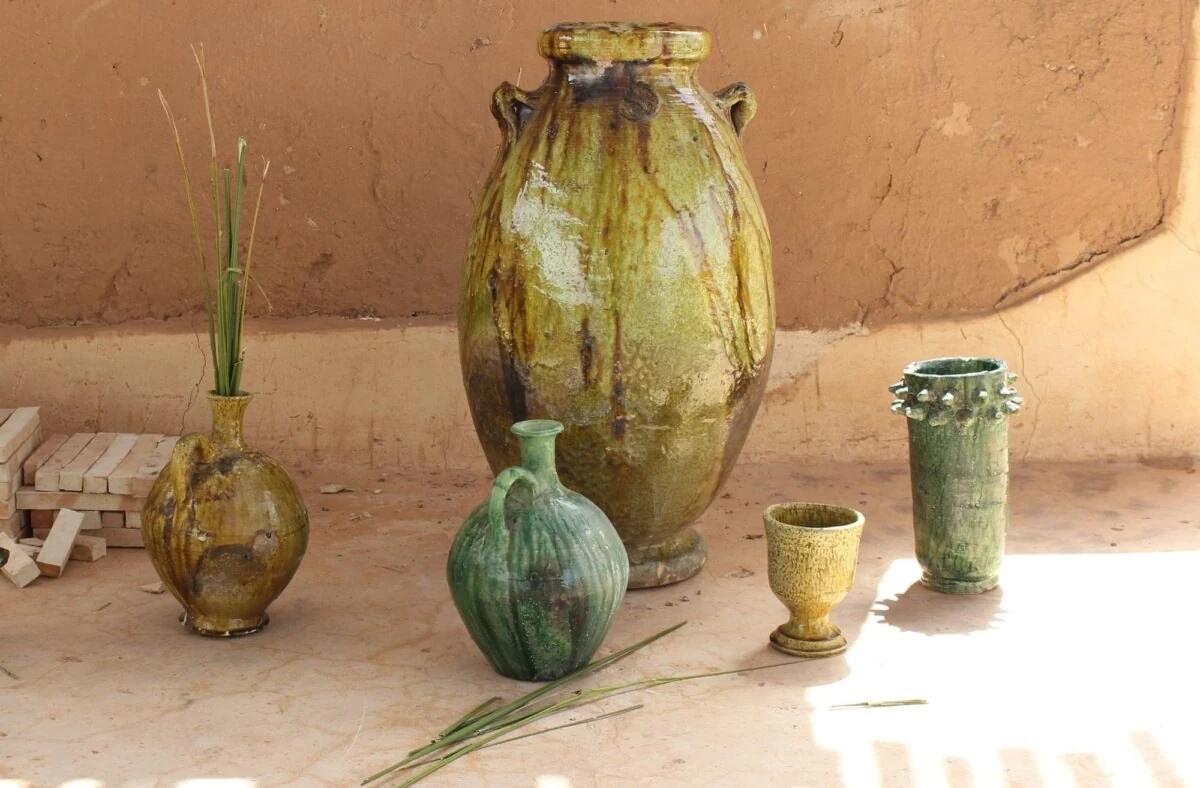
Tamegroute, near Zagora, is known for its green pottery. For a trip from Zagora, check the workshop address and how you will get back. Look at the shapes, glazes and finishes and ask what use each piece was made for. If it is glazed, ask where it was made, who made it and what the seller can tell you about food contact and heat. Keep those details with the workshop’s contact information.
At a market elsewhere in Morocco, a piece may have been made in another town. Ask where it was made as well as where you are buying it. If you want a souvenir from a specific workshop, ask for a label, receipt or use instructions. A clear description can record the material, place of manufacture and intended use. Those details tell you more about the piece than a guess based on its decoration.
Heat and food contact: two separate checks
A trivet under a vessel and a plate that comes into direct contact with food have different functions. Check heat suitability and food contact separately. Food safety authorities note that lead from some traditional glazes can migrate into food if unsuitable materials or production methods were used. Ask for the information or markings that apply to the use you have in mind. Food and Drug Administration · Lead-glazed traditional pottery
If the trivet will only hold the outside base of a dish, ask about stability, insulation and the manufacturer’s heat instructions. If you also want to serve bread or other food directly on it, check that use separately. A handmade label or an intact surface gives you little information about either use. If it is a gift, pass on the instructions so the recipient knows how to use it.
Follow the directions when you use the piece at home. A crack, missing foot or loose pad can change the way it meets the table. Inspect it before placing a vessel on it, and clean it as instructed. If you lose the directions, use the receipt or the workshop details to ask for them again. For very hot cookware, a trivet with a clearly identified use simplifies serving.
Comparing options and packing a purchase
For example, the base of a dish might be 24 centimetres across and the flat part of the trivet only 22 centimetres. The base would extend beyond the usable area. Look for a model with an appropriate surface and confirmed suitability for the heat. If the seller agrees, test for wobbling with a cold object of comparable size. Then check that the piece fits in your luggage and in the space where you will store it.
To compare two offers, copy the material, useful dimensions, instructions, declared provenance and price. Ask if the package is included and how much it adds to the size of the package. For a rigid piece, protect the edges and prevent movement in the box. If you buy more than one item, ask to pack it separately. In your home, keep the instructions that accompany the purchase and avoid testing resistance by directly placing a container at an unknown temperature.
In store, bring two measurements: the base of the dish you serve and the free space on your table. Compare them with the real object, not counting an elevated border as a support area. If you use more than one container, indicate which one is heavier or hottest. Also ask if the support should be placed on a particular surface. This preparation allows you to choose between a small service room and a support for your main container.
For a trivet you plan to give as a gift, consider storage and cleaning. Check whether it lies flat in a drawer and whether its thickness fits. Ask how to clean it, especially when it has a plate with separate feet or pads. Keep the instructions with the piece. The recipient can then choose the correct cookware and spot damage that might make the trivet unsuitable.
Serving a tagine at home
Before bringing over the cooking vessel, clear a stable spot and put down a suitable trivet. Arrange plates and bread so people can reach them without leaning over the tagine. Leave a separate place to set the lid down. Follow the vessel instructions and watch for steam as you lift its lid. With children at the table, point out which items are hot and serve from a stable position.
For a gift, you can associate the support with a note on the place of purchase, the person who made it and confirmed use. If you acquired the coin in Safi or Tamegroute, mention the city where you chose it and the announced provenance. The guide to the tajine gives references for reading the menu or understanding the container. Together, the recipe you have discovered and the object you bring back tell a specific part of the journey.
If you regularly serve two hot dishes together, measure the space you need for lids and serving utensils as well. Try out the arrangement with cold objects. Decide where each pot will go, how diners can reach their portions and how you will lift the pot again. This helps you choose between using two trivets and setting up a separate serving area. Check the intended use of each trivet and leave the routes around the table clear.
Frequently asked questions
What size trivet do I need for a tagine?
Measure the base of the tagine and the usable area of the trivet. Check that the vessel sits securely, that it has enough room and that the trivet is rated for the heat.
Can food be served directly on a trivet?
Ask whether the piece is intended for direct food contact. A trivet designed to hold the outside of a hot pot may have different use instructions from a serving plate.
